
Industrial cleaning technologies
More than washing.
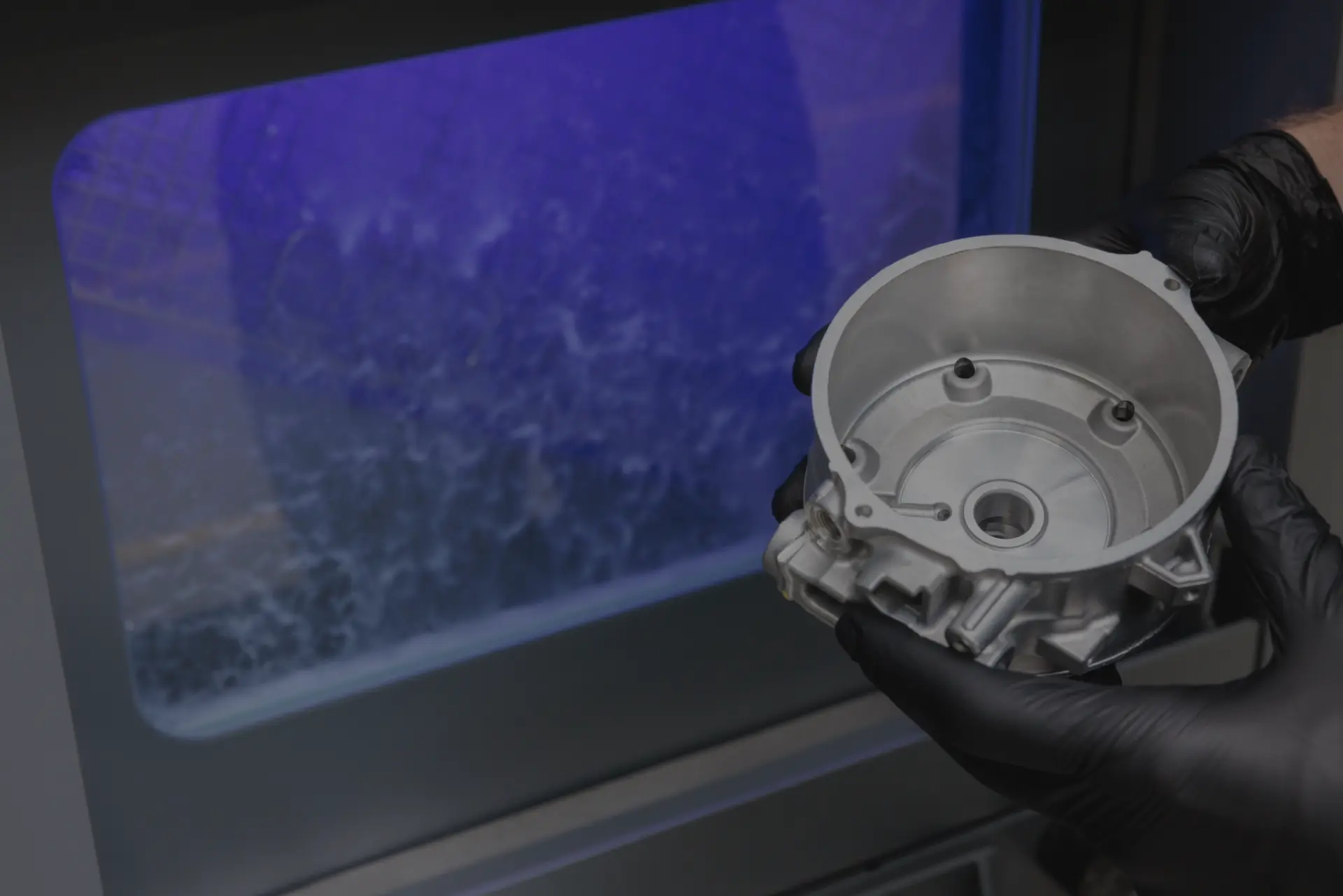
The key to success is choosing the right cleaning technology. Each material requires an individual approach and the appropriate method for removing contaminants. Our comprehensive solutions are focused on achieving perfect cleanliness of every part.
The cleaning method matters.
Discover what we can do for you


Materials suitable for water-based cleaning
Types of water-based cleaning
Spray cleaning
Process description
Spray cleaning uses the mechanical force of a liquid stream generated by a pump.
The pump delivers the liquid to a spray manifold, and then to nozzles at a pressure ranging from a few to several dozen bars.
Selection of chemical agents
In spray cleaning, it is crucial to use low-foaming chemical agents. Excessive foam not only reduces the mechanical force of the liquid stream but also contributes to the transfer of contaminants into the rinsing chamber and causes foam to escape from the cleaning machine.
Applications
Immersion cleaning
Process description
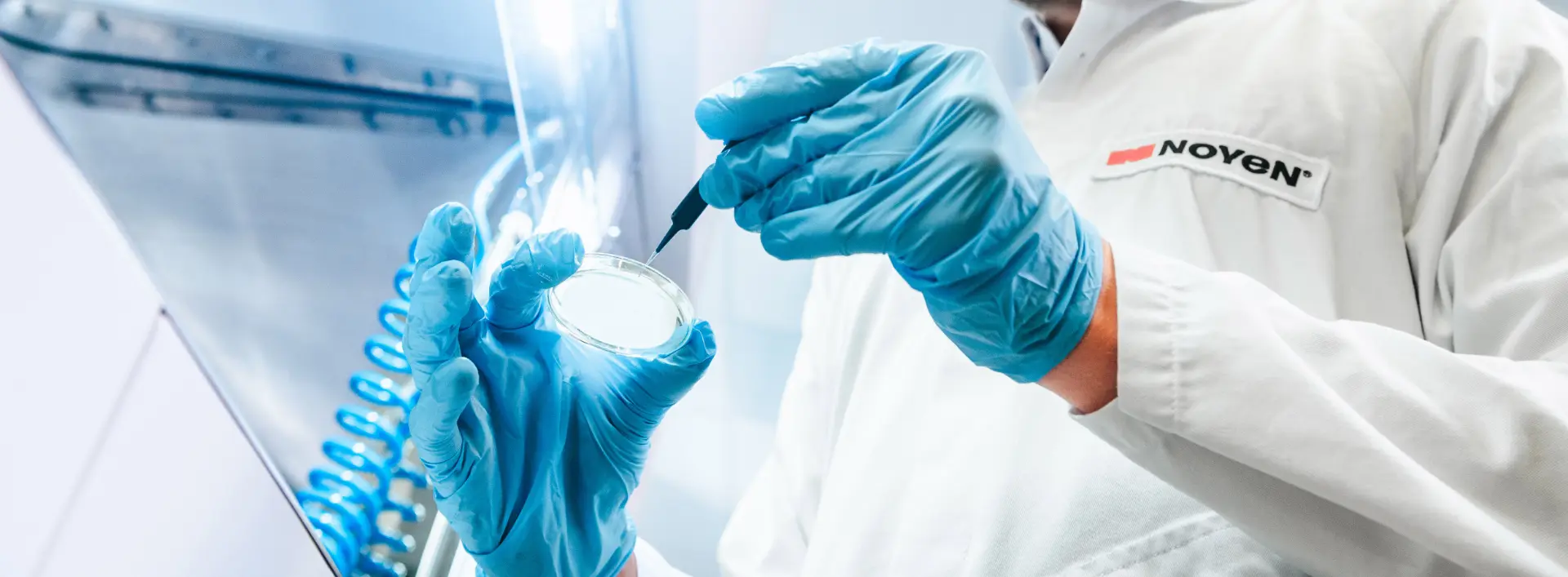
Immersion cleaning involves placing components in a bath with a suitably selected chemical agent. Cleaning occurs solely through chemical action without additional mechanical force.
Basket-type cleaning machines can be equipped with additional basket movement (oscillation or rotation) or enhanced with features such as air bubbling (barbotage) or forced liquid movement, which increase the process efficiency.
Reduced-pressure cleaning
Process description
Cleaning under reduced pressure utilizes controlled vacuum cycles to enhance fluid penetration and improve cleaning performance for complex part geometries.
Vacuum cleaning removes trapped air from cavities, channels, pores, and other hard-to-reach areas, allowing the cleaning fluid to effectively reach the entire surface of the component. By applying cyclic pressure changes, the technology improves contaminant removal while maintaining a gentle cleaning action on sensitive and precision-engineered parts.
Applications
Ultrasonic cleaning
Process description
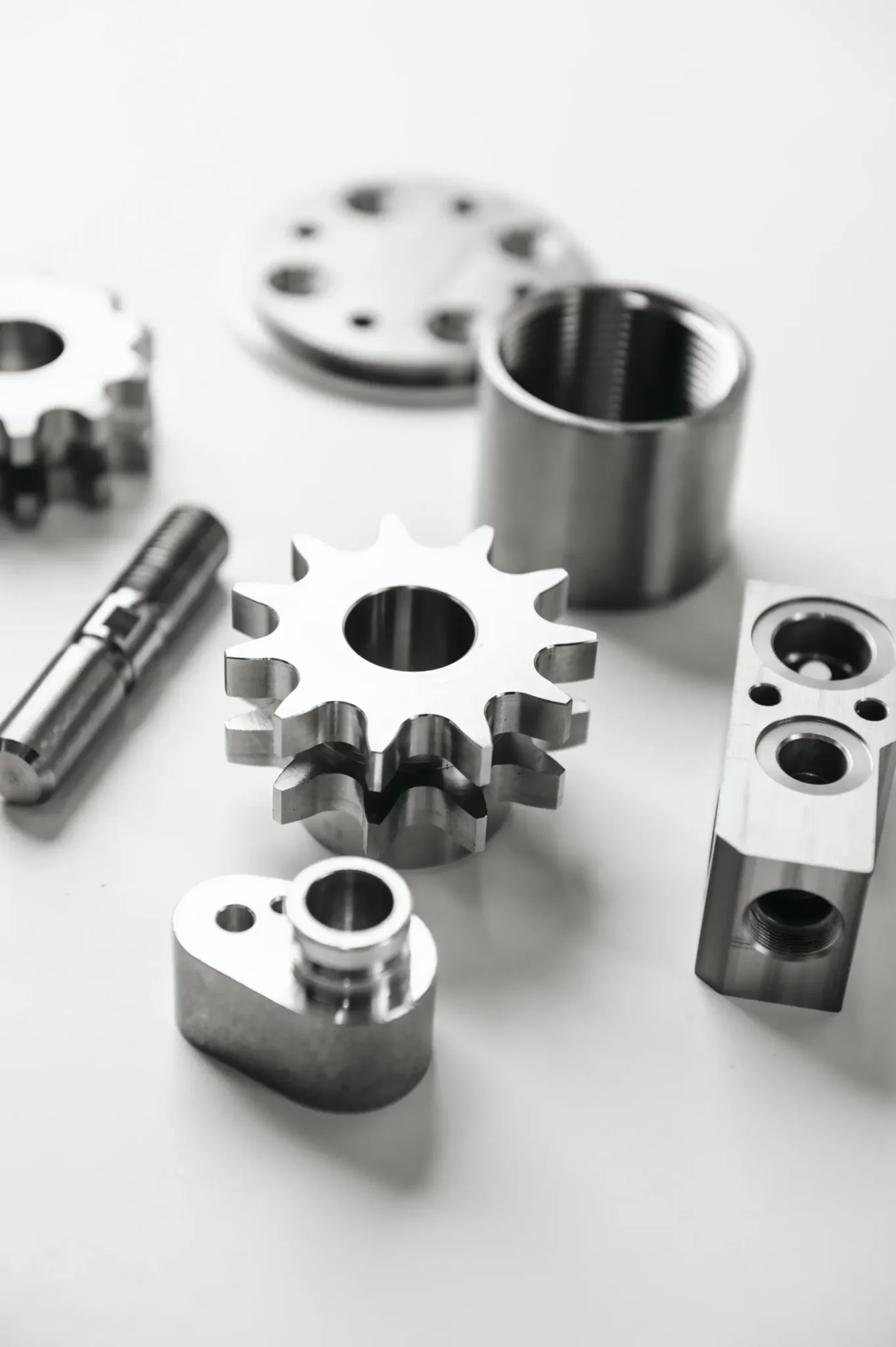
Ultrasonic cleaning is a method in which additional mechanical force is introduced into the cleaning process. The application of ultrasonic waves generates a phenomenon known as cavitation, which results in the detachment of contaminants from the part being cleaned. Ultrasonic technology is used for cleaning components with complex geometries and in cases where the chemical reaction with an immersion bath alone is not sufficient.
Applications
Frequency selection
- Lower frequencies (e.g. 25 kHz) provide greater mechanical force. They are effective for heavy contamination but may cause degradation of sensitive materials.
- Higher frequencies (above 40 kHz) have a gentler action. They are recommended for cleaning components made of delicate materials or with porous surfaces (e.g. aluminum castings) to avoid so-called cavitation erosion.
High-pressure cleaning
Process description
High-pressure cleaning (HP) involves removing contaminants using pure water under very high pressure (50–2500 bar) without the addition of chemical agents. The process relies solely on the mechanical action of the water jet.
This method requires the use of a special hydraulic system adapted to withstand high pressure. High-pressure cleaning is environmentally friendly, as it does not require the use of aggressive chemical agents. The effectiveness of the process depends primarily on the proper selection of equipment and the precise adjustment of pressure according to the type and degree of contamination.
Applications
- Removal of surface-related contaminants: burrs, flash, and mold residues
- Elimination of residues after threading and CNC machining
- Removal of deposits from pipes and internal installations
- Cleaning of tanks and containers
- Czyszczenie zbiorników i pojemników
- Removal of paints, coatings, rust, and scale
- Surface finishing prior to subsequent production stages
- Pre-washing before chemical cleaning processes
| Cleaning method | Applications | Advantages | Limits |
|---|---|---|---|
| Water-based cleaning: spray, immersion, ultrasonic | Automotive, aerospace, metal, machine, precision, paint, medical, and other industries | Versatile application; effective with large quantities of parts; wide range of chemical preparations | Not suitable for water-sensitive materials; requires drying; risk of corrosion |
| Water-based cleaning: high pressure | Large surfaces, injection molds, castings | Highly effective mechanical removal of contaminants; no chemicals | Risk of damage to delicate surfaces; high water consumption |
| Solvent cleaning | Automotive, aerospace, electronics, defense, machinery, and tool industries | Highly effective degreasing; no drying required; solvent regeneration; no corrosion | Environmental and health and safety requirements; higher costs of preparations; possible emission of vapors; weaker effectiveness on mineral contaminants and solid particles. |
| Air cleaning | Electronics, optics, pharmaceuticals | Effective in removing electrostatic discharge (ESD); no liquids or solvents. | Does not remove greasy stains; high consumptionand high cost of compressed air |
Not sure which cleaning technology is best suited to your production?
At NOYEN, we know that every process is unique.
That’s why we offer a customized selection of technologies tailored to your specific needs – to ensure maximum efficiency, economy, and safety.
Contact us and our experts will help you find the optimal solution.